The Problem
Plastic Pollution Knows No Borders
What enters the environment somewhere today can become a problem for all of us tomorrow.
What Animals Ingest Does Not Remain Their Problem Alone
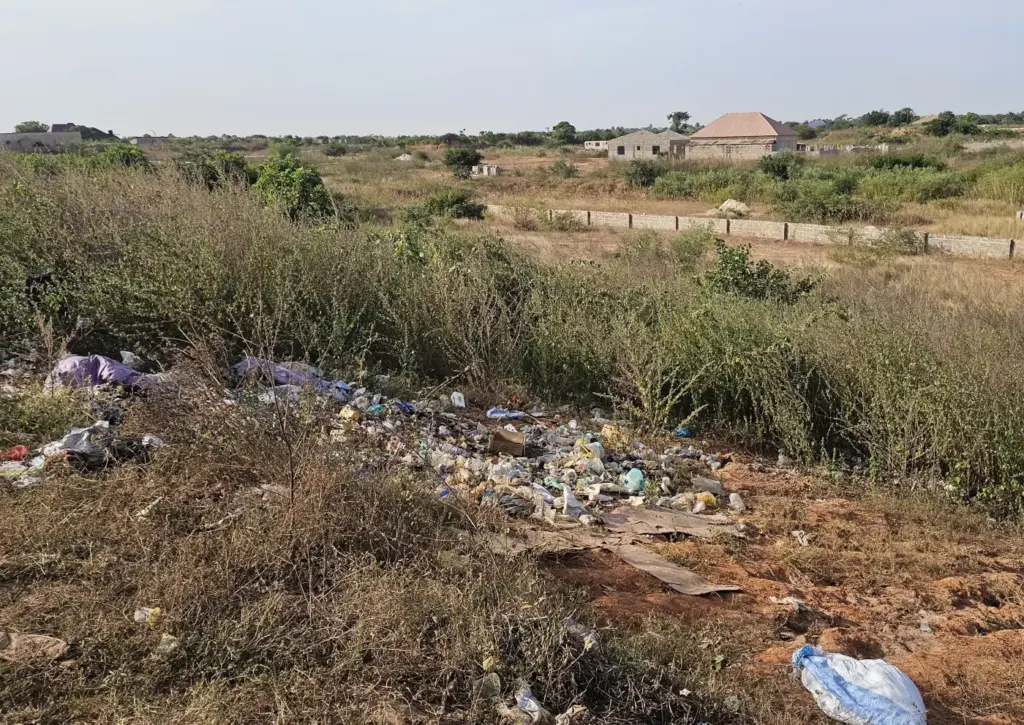
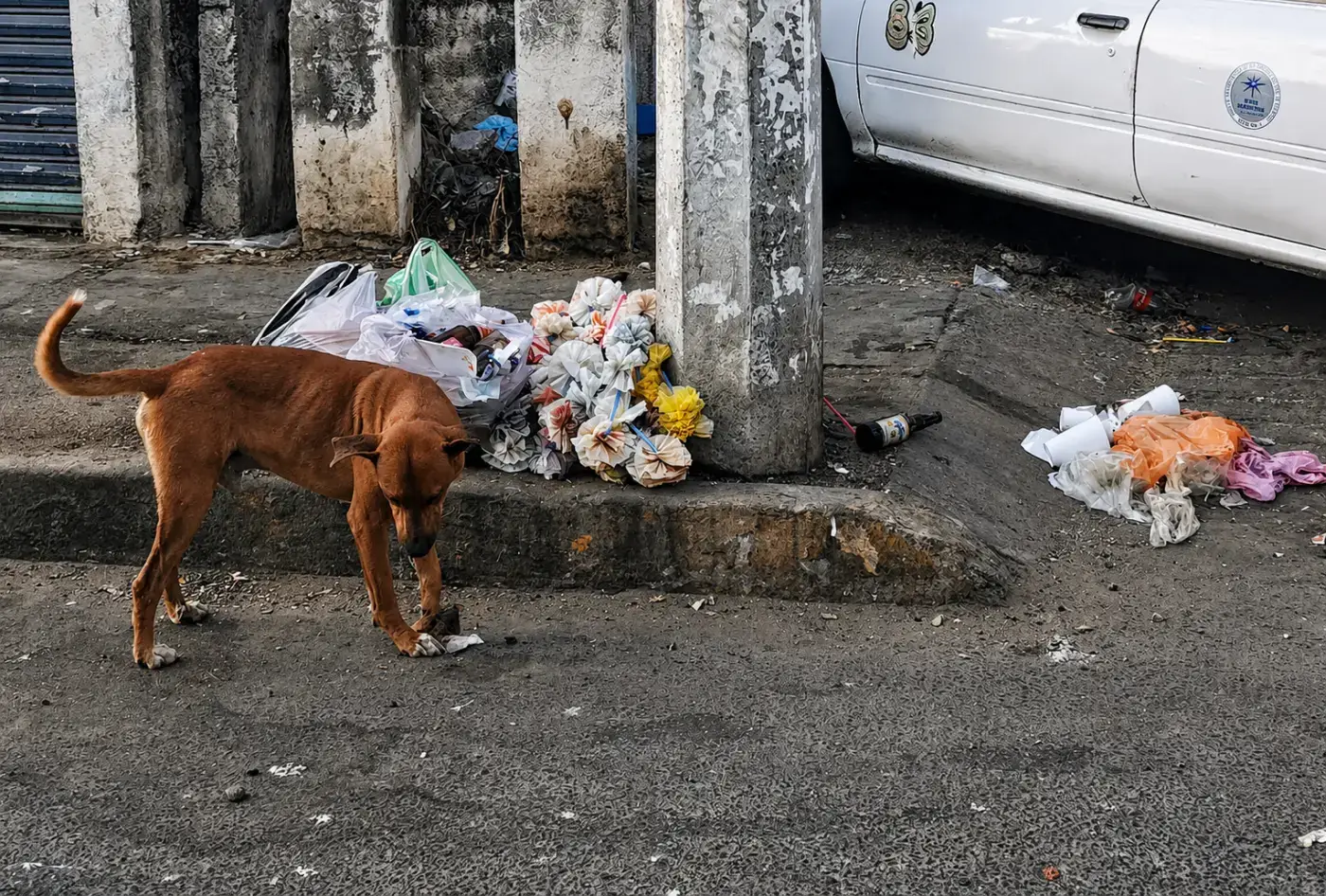
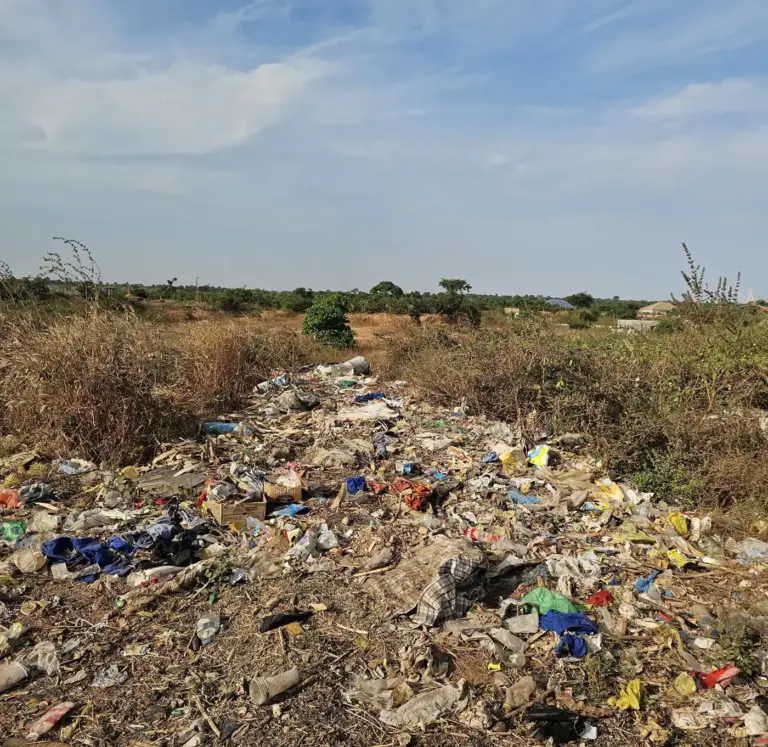
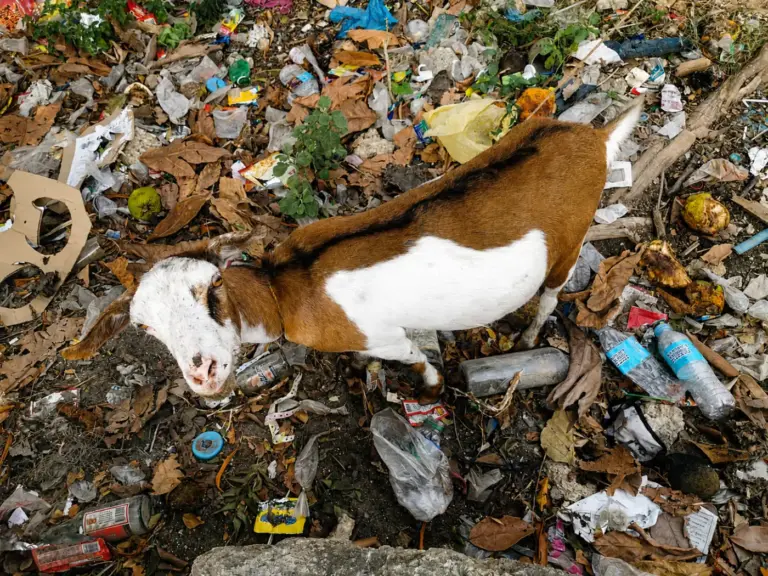
Plastic waste does not only damage landscapes. It affects life itself. Animals search for food among rubbish, waterways become polluted and soils are contaminated over time. What we throw away remains part of the environment we all share.
19 to 23 million tonnes. Every year.
According to estimates by the UN Environment Programme, this is how much plastic waste enters lakes, rivers and seas worldwide each year.
Year after year.
What lies in a ditch, by the roadside or along a riverbank today may be carried much further tomorrow. It breaks down, spreads and eventually becomes a problem that can no longer simply be collected and removed.
Plastic knows no borders. That is why this problem concerns every one of us.
And That Is Exactly Why It Makes Sense to Start Here.
A school class that understands.
A family growing bamboo.
A company that gets involved.
A community that collects its waste.
One plastic bottle that does not end up in nature.
It may sound small.
But every major environmental problem is ultimately the result of billions of small decisions.
And that is exactly where we can begin to change them.
Das Problem ist global. Veränderung beginnt lokal.
Wir können nicht jeden Plastikmüll der Welt auf einmal beseitigen. Aber wir können verhindern, dass neuer Müll entsteht, Wissen schaffen, Alternativen fördern und Menschen stärken, die vor Ort etwas verändern wollen. Genau dort beginnt Hoffnung, die wachsen kann.
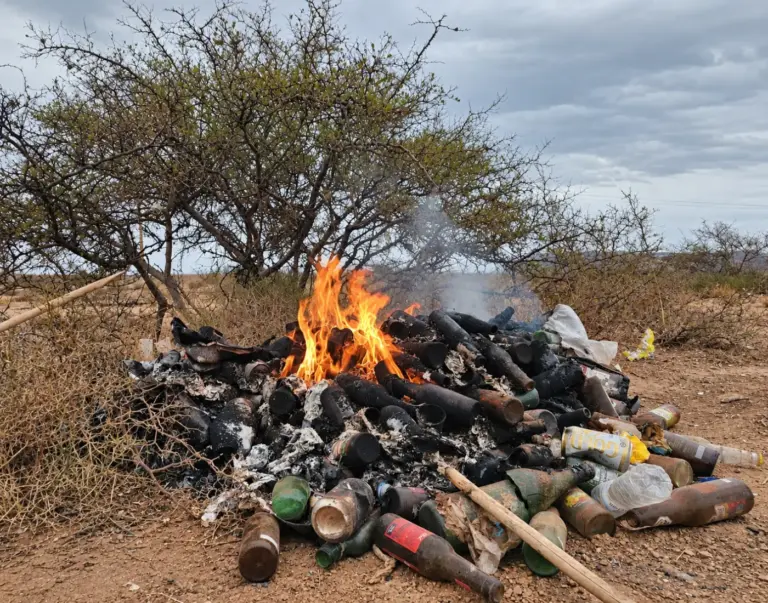
Die Belastung verändert nur ihre Form.
Wenn Plastik verbrannt wird, verschwindet das Problem nicht. Der Müll ist danach vielleicht nicht mehr sichtbar – doch Rauch, Rückstände und Schadstoffe können Menschen und Umwelt weiter belasten.
Lasst uns aufräumen
Das Problem ist riesig. Aber Veränderung beginnt nie riesig. Sie beginnt mit einem Kind, das versteht. Mit einer Familie, die anders handelt. Mit einem Helfer, der einen Sack Müll aus einem Fluss zieht.
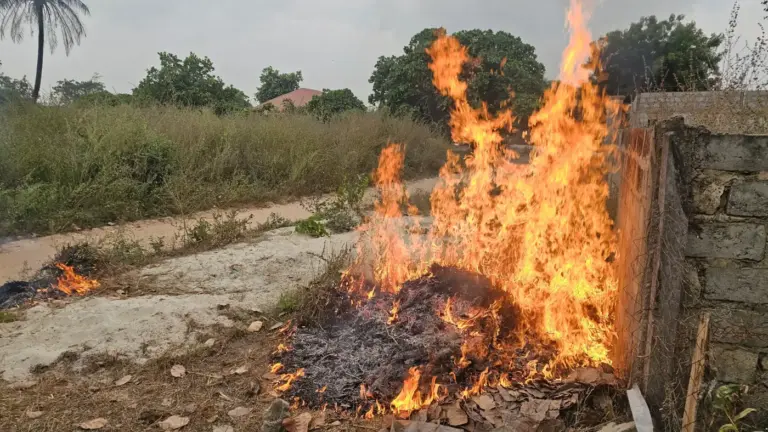
Waste Burning
A common and everyday sight is household waste being burned directly by the roadside. In many cases, almost everything that is no longer needed ends up in the fire — everything.
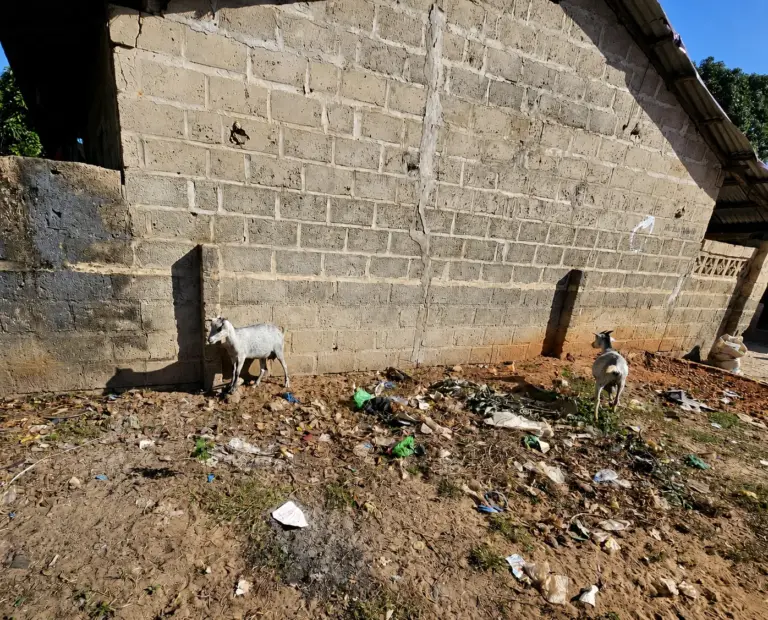
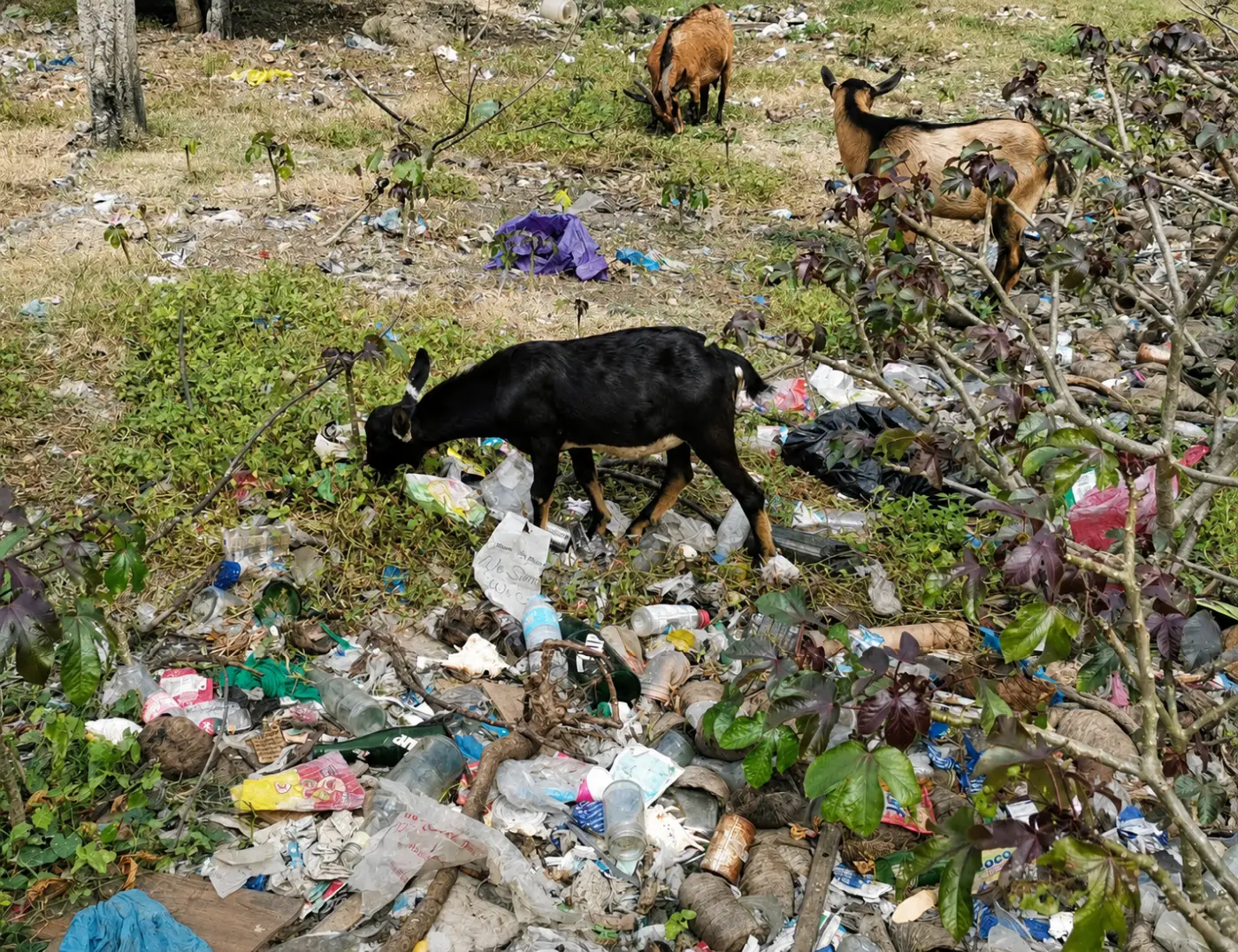
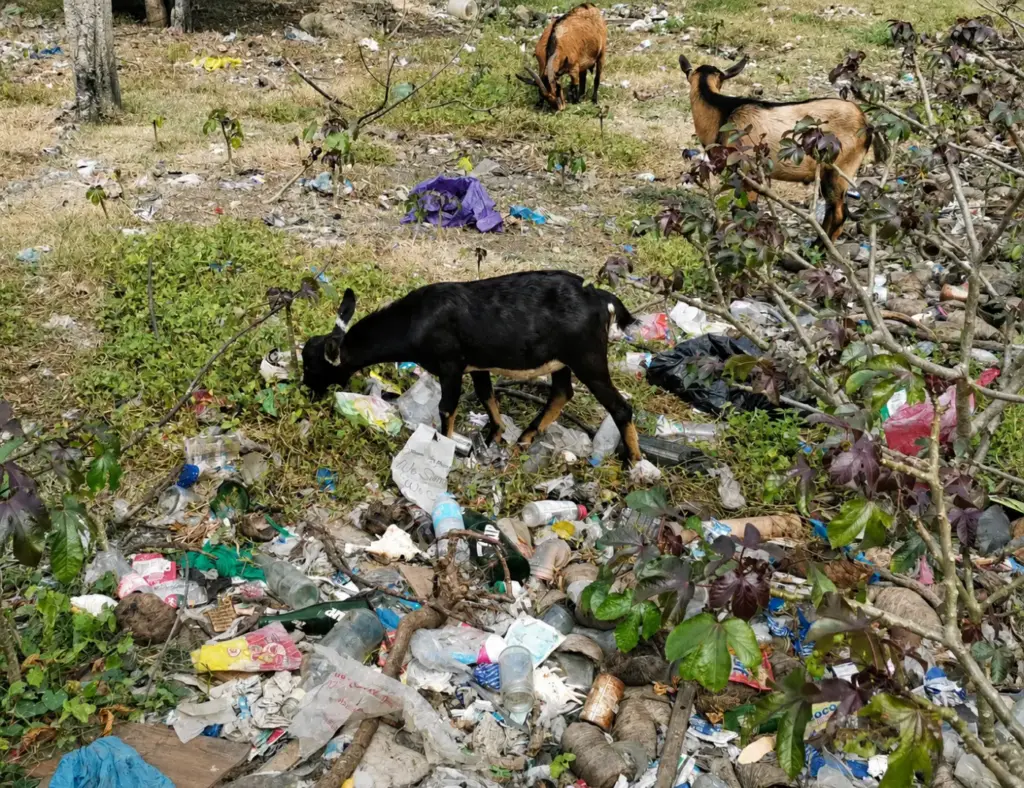
Animals Grazing Among the Waste
Animals often graze close to homes and directly among discarded rubbish.
This is exactly where awareness, education and practical alternatives are urgently needed.
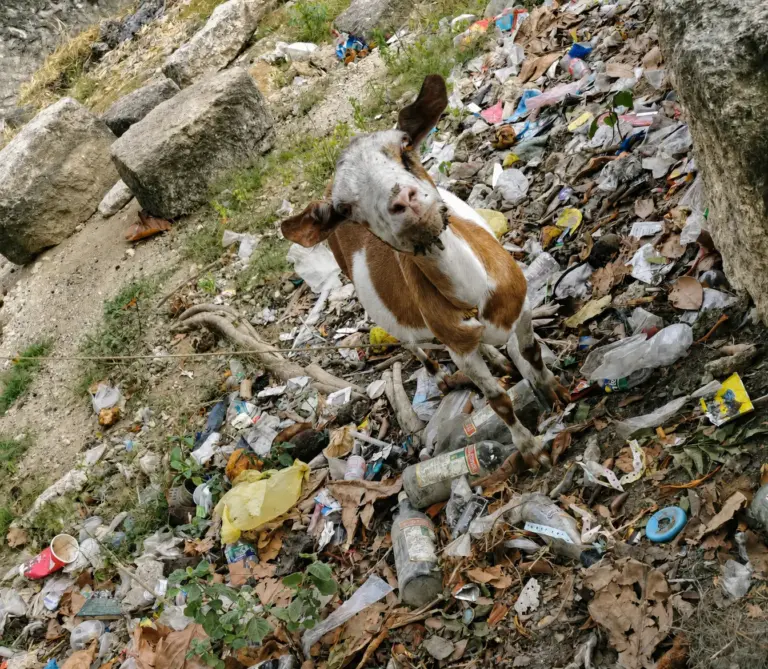
Difficult to See — and Impossible to Ignore
It is not only domestic animals and livestock that are exposed to microplastics. Fish and other living organisms can ingest plastic particles as well.
Over time, these particles can move through the food chain — ultimately reaching us too.
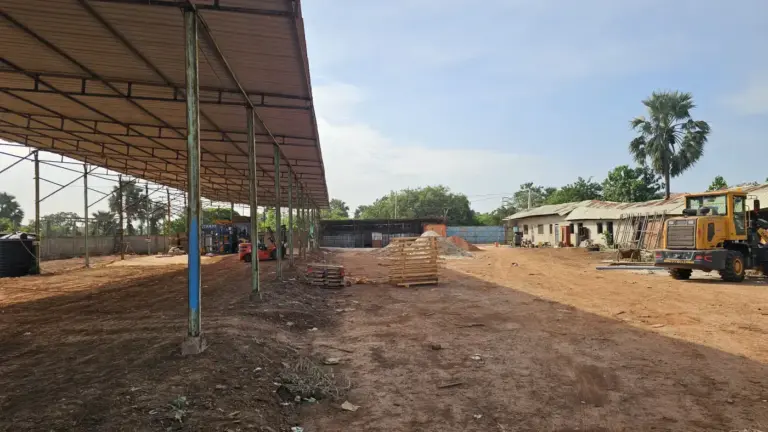
Recycling in Gambia
This is a recycling facility in Gambia that is currently unable to operate. The willingness to make it work is there — but often it is relatively small practical obstacles that bring everything to a standstill.
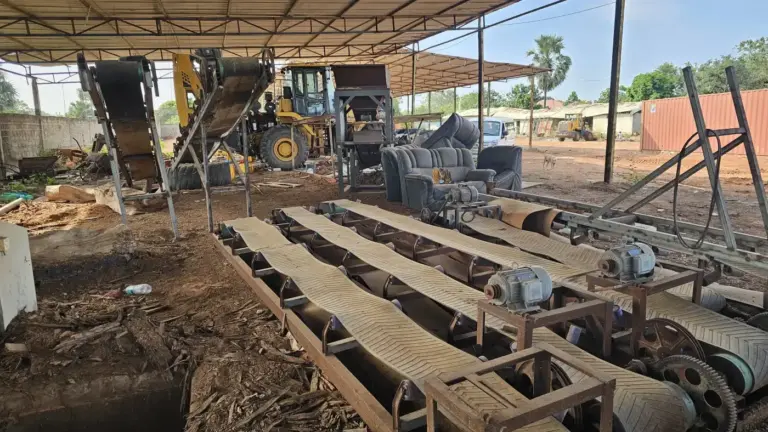
Lack of Reliable Electricity
Power outages, insufficient training and limited technical experience are challenges that could, in many cases, be addressed comparatively quickly with the right support.
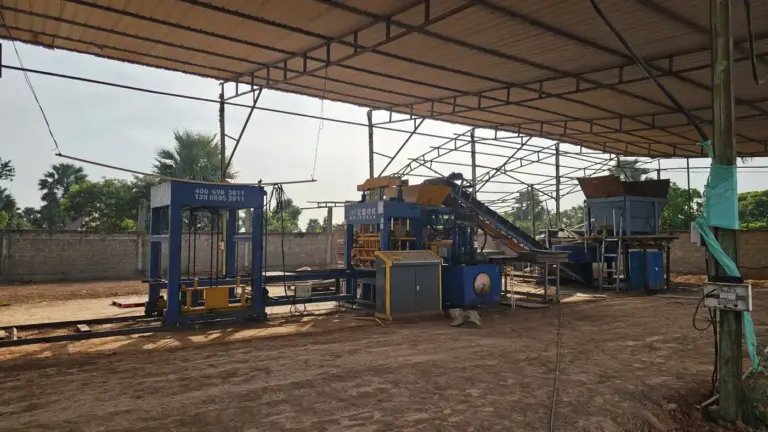
Missing Spare Parts
We visited the site ourselves to understand the situation firsthand and to explore what is needed to get waste collection and recycling activities moving again.
Sometimes, progress does not fail because of a lack of commitment — but because a machine is missing a part, power is unreliable, or the necessary technical knowledge is not yet available.
Every Clean Stretch of River Counts. Every Informed Family Counts. Every Alternative Counts.
Every polluted river shows us how urgently action is needed. But every cleaned stretch of river also shows that change is possible.
It is between these two realities that the future is shaped — by what we choose to do next.
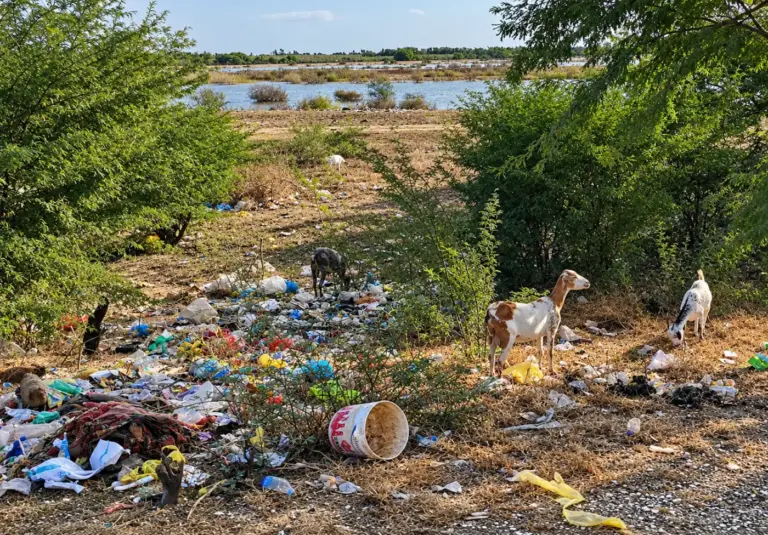
What Enters Nature Somewhere Today Can Become Everyone’s Problem Tomorrow
- A plastic bottle by the roadside.
- A bag caught in the bushes.
- Packaging discarded in a ditch.
- Waste being burned at the edge of a community.
At first glance, these may seem like local problems.
But plastic does not stop at municipal boundaries. It does not stop at national borders. And certainly not at continents.
Wind carries lightweight plastic further. Rain washes waste into ditches and waterways. Rivers transport it towards the coast. Ocean currents can spread plastic across enormous distances.
And while larger pieces of plastic gradually break down through sunlight, heat, water and mechanical stress, another problem begins to emerge — one that eventually becomes almost impossible to see:
Microplastics.
Over time, a single discarded plastic bottle can break down into countless smaller plastic particles.
These particles can enter soils and waterways, be ingested by organisms and continue to spread through natural systems. The possible uptake of very small plastic particles by plants is also an area of ongoing scientific research.
What was once large enough to pick up by hand can eventually become so small that removing it from the environment is extremely difficult.
That is why plastic pollution is not only a problem for the people living where the waste originates.
It concerns all of us.
A Plastic Bottle Is Never Simply “Gone”
Someone who throws a bottle into a river may lose sight of it within seconds.
To the person standing on the riverbank, the problem may appear to have disappeared.
But the bottle is not gone.
It is simply somewhere else.
- Perhaps it drifts a few kilometres downstream.
- Perhaps it becomes trapped among plants.
- Perhaps it slowly breaks apart.
- Perhaps it reaches a larger river.
- And perhaps, eventually, it reaches the sea.
Even there, its journey does not necessarily end.
Ocean currents connect regions and continents.
That is exactly why the phrase:
“But that is far away.”
is so misleading when it comes to plastic pollution.
When It Comes to Environmental Pollution, There Is No Real “Far Away”
Our rivers, oceans, soils, animals and ecosystems are all connected.
Rivers Become Transport Routes for Our Waste
Water means life.
But water also carries what people throw into it.
Plastic bottles, packaging, bags and other waste are washed by rain or blown by wind into drainage ditches and smaller waterways.
From there, they can enter larger rivers.
And rivers often lead to the sea.
This is how a single discarded object can become a problem that travels far beyond the place where it was originally thrown away.
That is precisely why polluted rivers are so critical.
They are not simply places where waste accumulates.
They can become transport routes for plastic pollution.
Every bag of waste removed from a river is therefore more than a cosmetic clean-up.
It prevents at least that waste from being carried further.
Microplastics Turn a Visible Problem Into an Invisible One
Large pieces of plastic are easy to notice.
You can see a bottle.
You can pick up a bag.
You can collect a sack full of discarded packaging.
Microplastics are different.
The further plastic breaks down, the harder it becomes to remove it from the environment.
Small plastic particles can spread through soils and sediments, enter waterways and be taken up by different organisms.
This creates a particularly serious development:
Eventually, the waste becomes almost invisible — but it is still there.
That is why it is so important to act before plastic has broken down into countless tiny particles.
The best plastic bottle in the ocean is the one that never reached it in the first place.
Animals Do Not Know What Plastic Is
To us, a plastic bag is waste.
To an animal, it is simply another object in its environment.
Animals may swallow plastic.
They can become entangled in strings, bags or discarded packaging.
Small plastic particles can enter organisms through water and food.
Plastic therefore reaches places where it should never have been.
- Soils.
- Waterways.
- Animals.
- Food chains.
- Our shared environment.
And that is why plastic pollution affects us regardless of where we live.
Burning Plastic Does Not Make It Simply Disappear
Where functioning waste-management systems are lacking, fire can appear to be the easiest solution.
The rubbish is there.
- There is no regular waste collection.
- No container.
- No functioning sorting system.
So the waste is burned.
At least afterwards, it is no longer visible.
But plastic is not a natural material that can simply be burned in the open without consequences.
When mixed plastic waste is burned uncontrollably, substances harmful to both human health and the environment can be released.
The problem does not disappear.
It simply changes its form.
Waste on the ground becomes smoke, residues and pollutants.
People nearby may breathe them in.
The wind carries them further.
And a waste-disposal problem becomes an additional health and environmental problem.
Why Do People Throw Their Waste Into Nature in the First Place?
It would be easy to answer with an accusation:
“Because they simply do not care.”
But reality is not that simple.
Many things that we take for granted are completely or partially unavailable elsewhere.
- Reliable waste collection.
- Public waste bins.
- Collection points.
- Recycling centres.
- Sorting facilities.
- Transport vehicles.
- Reliable electricity.
- Affordable waste disposal.
And sometimes something even more fundamental is missing:
an understanding of what happens to plastic afterwards.
When a functioning waste-management system is missing, people are faced with everyday problems for which there may be no good solution.
The waste still has to go somewhere.
It is collected.
Dumped.
Burned.
Or eventually ends up in the landscape.
That is why it is not enough to simply tell people:
“Do not throw your waste into nature.”
At the same time, there has to be a realistic alternative.
The Waste Problem Is Also an Education Problem
One of the most important tasks does not begin with a refuse truck.
It begins in people’s minds.
- With knowledge.
- With understanding.
- With awareness.
Someone who does not know what happens to a plastic bottle after it disappears into a river may initially see only one thing:
- The bottle is gone.
- But it is not gone.
- It has simply moved somewhere else.
- These connections need to be explained clearly.
- In schools.
- In families.
- In communities.
- In businesses.
- Within public authorities.
And everywhere decisions about consumption and waste are made.
A Clean River Does Not Begin with the Clean-Up
Clean-up campaigns are important.
Extremely important.
Within just a few hours, people can remove remarkable amounts of waste from streets, landscapes and waterways.
But if new waste appears again the following day, the work begins all over again.
That is why we also need to intervene earlier.
By asking:
Why Does the Waste End Up There in the First Place?
When a child understands what happens to a plastic bottle after it enters a river, their perception changes.
When a family understands why openly burning plastic is not a good solution, awareness begins to grow.
When companies recognise that less problematic packaging and better waste disposal can be part of their responsibility, change begins.
And when communities gain the means to build functioning structures, knowledge can turn into real action.
Knowledge creates awareness.
Awareness can create new habits.
And many new habits can eventually change a society.
This Is Where the Work of the Bamboo Foundation Gambia Begins
There are people in Gambia who do not want to wait for someone else to solve the problem one day.
People who want to change their own country.
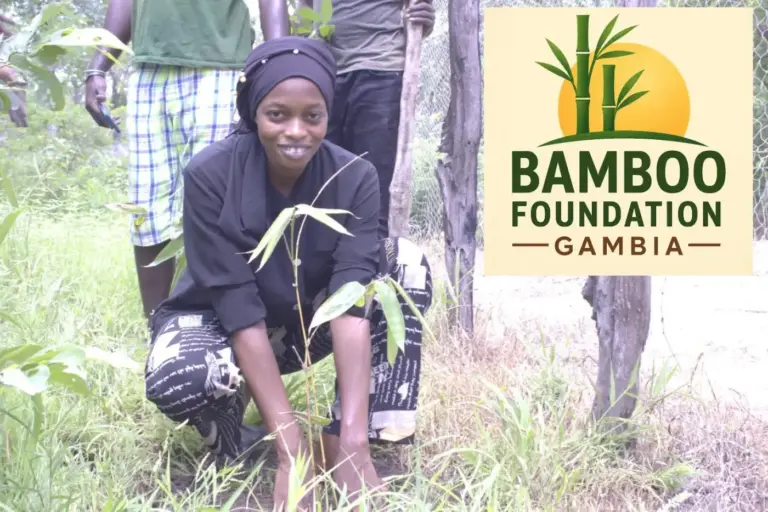
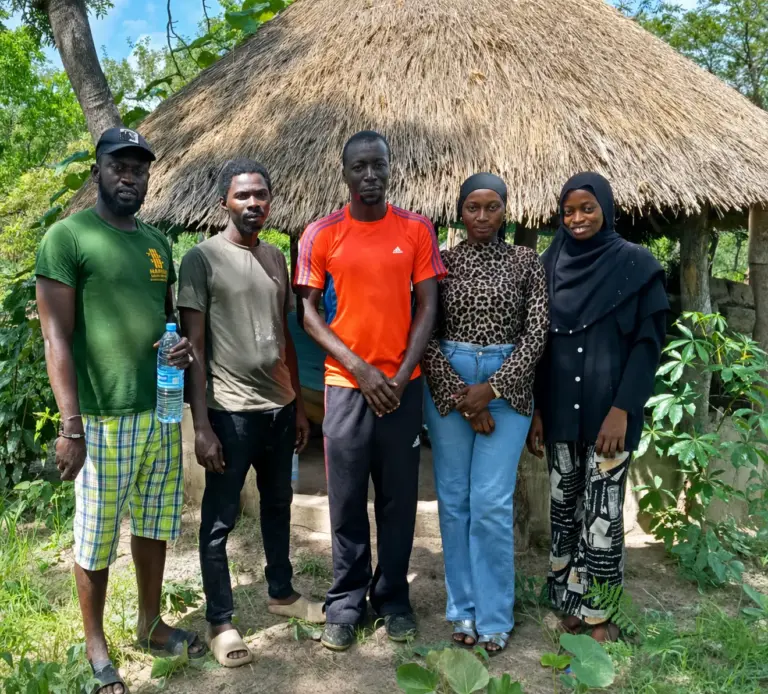
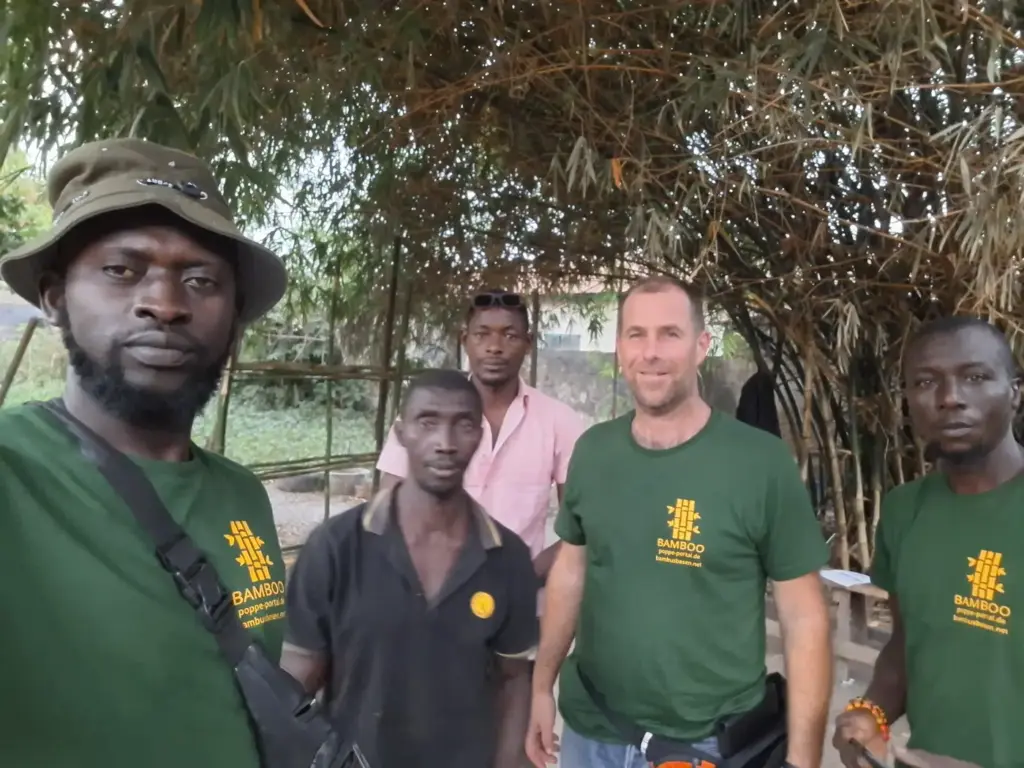
One of them is Omar Darboe, founder and president of the Bamboo Foundation Gambia.
Omar does not know these challenges from reports.
- He lives there.
- He speaks with families and communities.
- He sees polluted roads and waterways.
- He understands both the possibilities and the limitations of the existing infrastructure.
And above all:
He Believes That Change Can Grow from Within Gambia Itself
Not through lectures from outside.
But by informing, motivating and involving the people who live there.
Change Needs People Who Are Willing to Begin
The Bamboo Foundation Gambia wants to bring people together.
- Reach children and young people.
- Inform families.
- Mobilise volunteers.
- Involve communities.
- Engage businesses.
- Work together with public authorities and political decision-makers.
And show that environmental protection does not begin only at international conferences.
It may begin somewhere entirely different.
- At the side of a road.
- In a classroom.
- Within a family.
- Beside a polluted river.
- With a volunteer carrying a rubbish bag.
Or with one person who understands for the first time why the plastic bottle in their hand should not simply end up in the environment.
This Is Not About Judging People
This point is especially important to us.
Friends of the Bamboo Foundation Gambia e.V. and the Bamboo Foundation Gambia do not want to tell people from outside how they should live.
Lasting change does not come from blame.
It comes from:
- Knowledge.
- Opportunities.
- Alternatives.
- New perspectives.
And from local people who take responsibility and inspire others to join them.
That is why the work in Gambia is driven by people who know the country, its structures and everyday realities.
Local responsibility remains where the change itself is meant to happen.
Gambia Is the Starting Point — but the Problem Is Global
Our work initially focuses on Gambia.
But our motivation reaches far beyond its borders.
Plastic waste in the ocean is not a Gambian problem.
Microplastics are not an African problem.
The wasteful use of plastic is not the problem of one continent alone.
It Is a Problem We All Share.
What we learn in Gambia may therefore also become valuable far beyond Gambia.
- Which forms of environmental education are effective?
- How can communities be motivated?
- How can sustainable materials become economically attractive?
- How can environmental protection be connected with new income opportunities?
- How can local initiatives grow without losing local ownership and responsibility?
The answers to these questions may be valuable for many other regions as well.
We Cannot Simply Collect Waste and Stop There
Of course, existing waste has to be removed.
But if we focus only on collecting rubbish, we are mainly dealing with the consequences.
Our real goal has to go further:
In the long term, less new plastic waste should be created and less plastic should end up in the environment.
To achieve that, several things need to work together:
- Awareness.
- Environmental education.
- Waste collection.
- Better waste management.
- Recycling.
- Functioning local structures.
And:
Sustainable Alternatives.
This is where one particular resource becomes especially important to the work of the Bamboo Foundation Gambia:
Bamboo.
Bamboo Is Not a Miracle Solution
We believe it is important to say this clearly.
Bamboo cannot replace every plastic product.
Bamboo does not automatically solve the problems caused by inadequate waste-management systems.
And one bamboo plant cannot clean a polluted river overnight.
But bamboo offers something particularly valuable:
It is a renewable resource that can be used for a wide range of products that are currently made, at least in part, from plastic or other materials.
And it can grow locally.
That creates a connection that is especially important to us:
Environmental Protection and Economic Opportunity Can Go Hand in Hand.
Because lasting change is far more likely when a better solution is not only environmentally responsible, but can also improve people’s everyday lives.
Environmental Protection Needs Opportunities
Imagine a family that does not simply hear:
“Plastic is bad for the environment.”
But at the same time learns:
“Something can grow on your own land that may provide your family with additional income in the long term.”
Suddenly, sustainability takes on a different meaning.
It is no longer just a demand.
It becomes an opportunity.
That is exactly why our approach goes beyond waste collection.
We want to connect environmental awareness with practical opportunities.
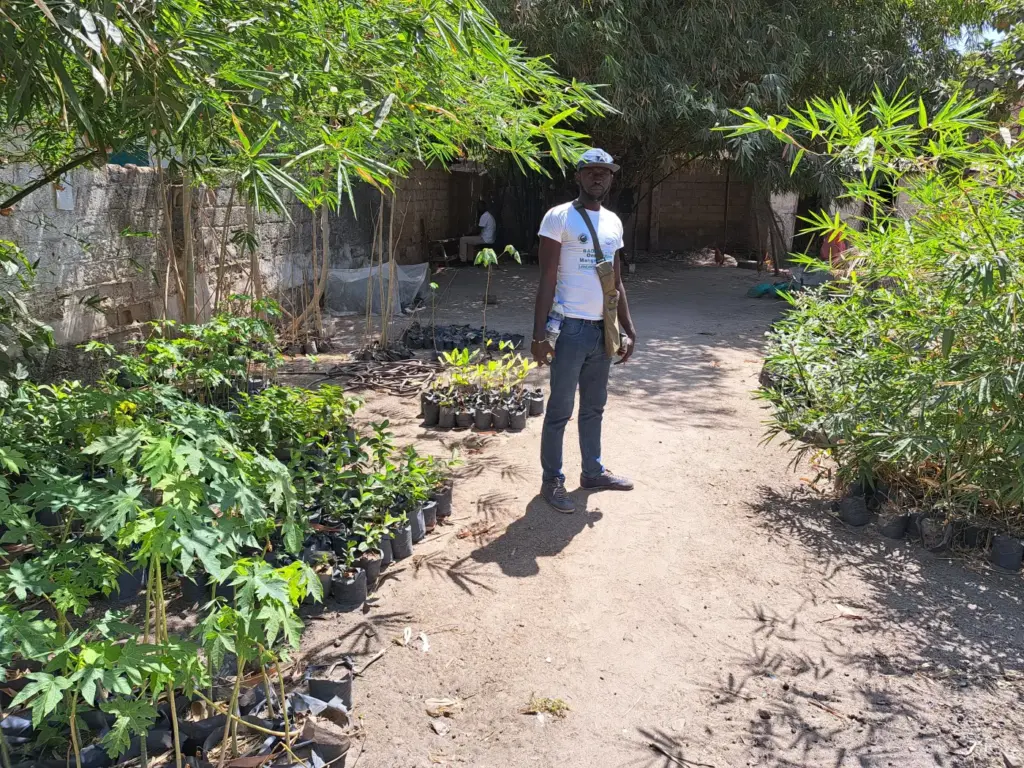
- Grow bamboo.
- Inform people.
- Involve families.
- Create income opportunities.
- Replace plastic where practical alternatives make sense.
- Collect waste.
- Support recycling.
And help build structures that can continue to function in the long term without permanent outside assistance.
The Challenge Is Great. But Change Has to Begin Somewhere.
We will not solve global plastic pollution with a single project.
That would be an unrealistic promise.
But doing nothing because the challenge is so large would be the worst alternative.
We can begin.
- With one child who understands why plastic does not belong in a river.
- With one volunteer removing waste from a waterway.
- With one family gaining a new opportunity.
- With one community beginning to think differently.
- With one company taking responsibility.
- With one bamboo seedling.
- With one person explaining to another why change is necessary.
Something Great Can Grow from a Small Beginning.
What Begins in Gambia Can Reach Far Beyond It
Our goal is not to be able to claim one day:
“We solved the plastic problem.”
Our goal is something more credible — and perhaps far more valuable in the long term:
- To show that change is possible.
- That local people can develop solutions themselves.
- That environmental education can make a difference.
- That economic opportunities and environmental protection can go hand in hand.
- That sustainable resources can become part of the solution.
And that a successful local approach may one day become an example for other communities, regions or even countries.
The Problem Affects Us All. The Solution Needs All of Us.
- Every plastic bottle that never reaches a river counts.
- Every bag of waste removed from nature counts.
- Every child who understands why environmental protection matters counts.
- Every family that gains a sustainable opportunity counts.
- Every person who decides to help counts.
That is why we are grateful to everyone who makes this work possible.
To the people who donate.
To the companies that support us.
To the partners who contribute knowledge, experience and valuable connections.
And above all, to the people in Gambia who take action themselves and want to create change in their own country.
None of Us Can Solve This Problem Alone.
But Together, We Can Make Change Happen.
The Next Step: From Challenge to Solution
We know why action is needed.
But one crucial question remains:
What Does a Practical Solution Actually Look Like?
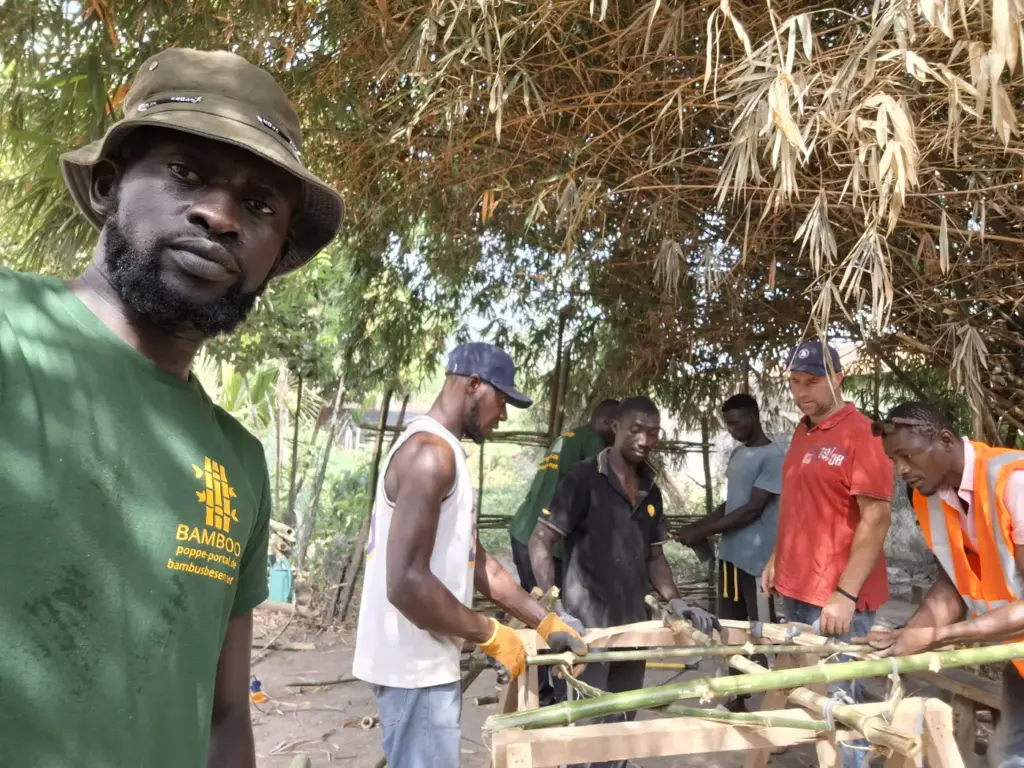
On the next page, we show how the Bamboo Foundation Gambia connects bamboo, environmental education, waste collection and local income opportunities.
- Why bamboo seedlings are provided to families.
- How this can create new opportunities, particularly for women.
- Why seedlings sometimes need to be delivered directly to families.
- How the Foundation later takes back the harvested bamboo.
- How volunteers clean rivers and communities.
- What role schools, businesses, recycling and political institutions can play.
And why we believe that, over time, these individual elements can grow into something much bigger.
Less Plastic. More Bamboo. More Opportunities.
Plastic Has Been Found Even in Places Where Hardly Anyone Lives.
Plastic pollution has now been detected in all major ocean basins, as well as on beaches, in rivers, lakes and terrestrial ecosystems — even in remote regions of the Arctic and Antarctic.
We have created a material that reaches places the people who discarded it may never have visited themselves.